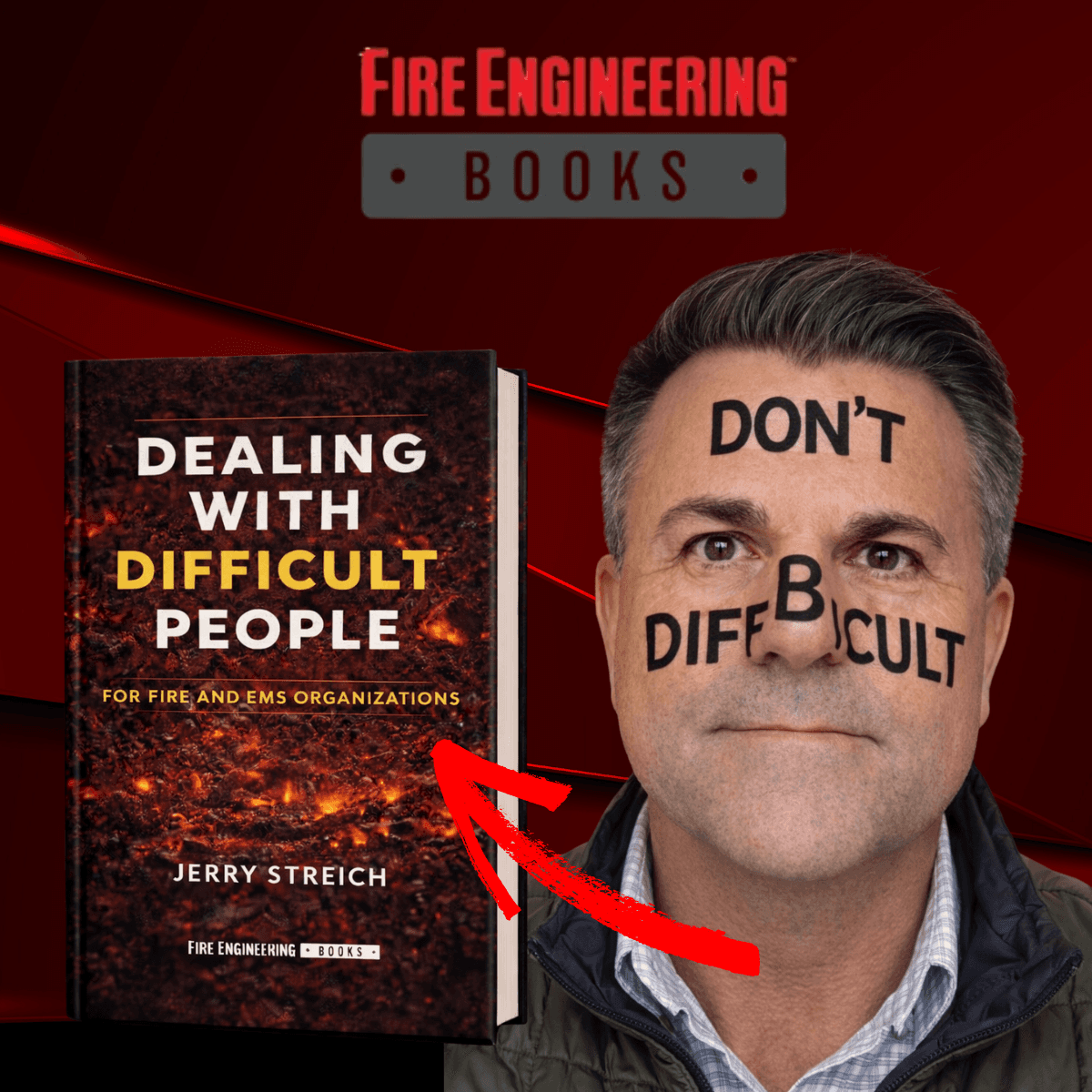
Dealing with Difficult People is the book I needed twenty years ago
Dealing with Difficult People is the book I needed twenty years ago
STAY TUNED! Every firehouse has one. Heck, every organization has one! You know who I am talking about before I finish the sentence, because the person came to mind the moment you read it, and that says something about how much room they take up in your day even when they are not in the room.
The difficult firefighter is the one whose mood sets the temperature of the bay before the coffee is poured, the one whose eye-rolls at the kitchen table tells you what kind of shift it is going to be, the one who pulls the energy of the crew toward whatever they are carrying that morning while everyone else quietly adjusts around it. The crew adjusts because the crew always adjusts. They read the room, they make the small accommodations, they smooth the edges where they can, and they keep the shift moving forward. Over time those small accommodations become the culture, and the difficult one stops being a problem the crew is managing and becomes the way the crew operates.
I spent thirty-four years in the fire service, and served every rank up to chief. In that time I watched difficult people do more damage to fire and EMS organizations than any budget shortfall, any political fight, or any failed inspection ever did. I watched good firefighters quietly transfer out of stations they used to love because they were tired of the friction. I watched officers stop speaking up in meetings because raising the issue was not worth what came after. I watched new hires arrive with the kind of energy that makes a department better and lose it within a year because nobody was willing to name what was happening on their crew. I watched chiefs lose sleep, lose focus, and in some cases lose their health. That includes me.
The hardest part of this work is that most of us were never trained for it. We were trained for fire behavior, for hazmat, for incident command, for the budget cycle, and for the mechanics of running a scene. We were not trained for the firefighter who undermines every officer who tries to lead them. We were not trained for the senior member who has been making the bay miserable for fifteen years and is six years from retirement. We were not trained for the human fires that start inside the station, and those are often the ones that burn the longest and cost the most.
Dealing with Difficult People is the book I needed twenty years ago and did not have. It walks through ten types of difficult people who show up in fire and EMS organizations, what their behavior actually costs, and what a leader can do about it before the damage compounds. The Difficult One is the first of the ten. Over the next several weeks I am going to walk through each of them here, one at a time.
If you have ever wondered why a good crew can feel off for reasons no one will name out loud, this series is written for you.